Setsubun bean throwing! The tradition and charm of the Daijingu Festival, one of Kofu’s three major festivals
2026.01.19
2026.01.19
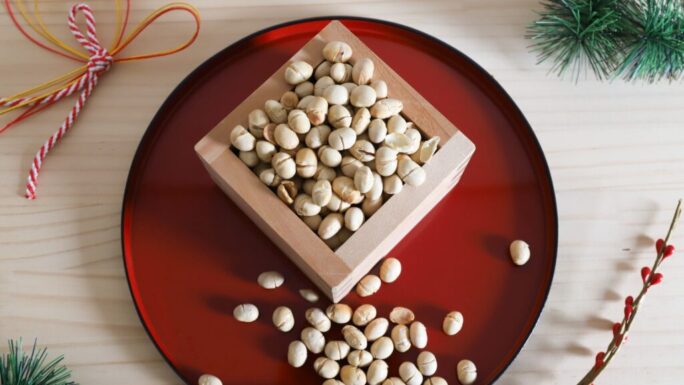
This time, we’ll introduce you to the Daijingu Festival, a historic winter tradition in Kofu that celebrates the Setsubun bean-throwing festival! We’ll introduce you to the history and origins of the Daijingu Festival, one of Kofu’s three major festivals, as well as highlights such as the bean-throwing ritual and street stalls. We’ll also introduce nearby tourist spots and the other three major festivals, which will help you plan your outing. There’s plenty to see and do at the Daijingu Festival, so be sure to visit Kofu and experience it for yourself!
The Daijingu Festival that colors Setsubun in Kofu
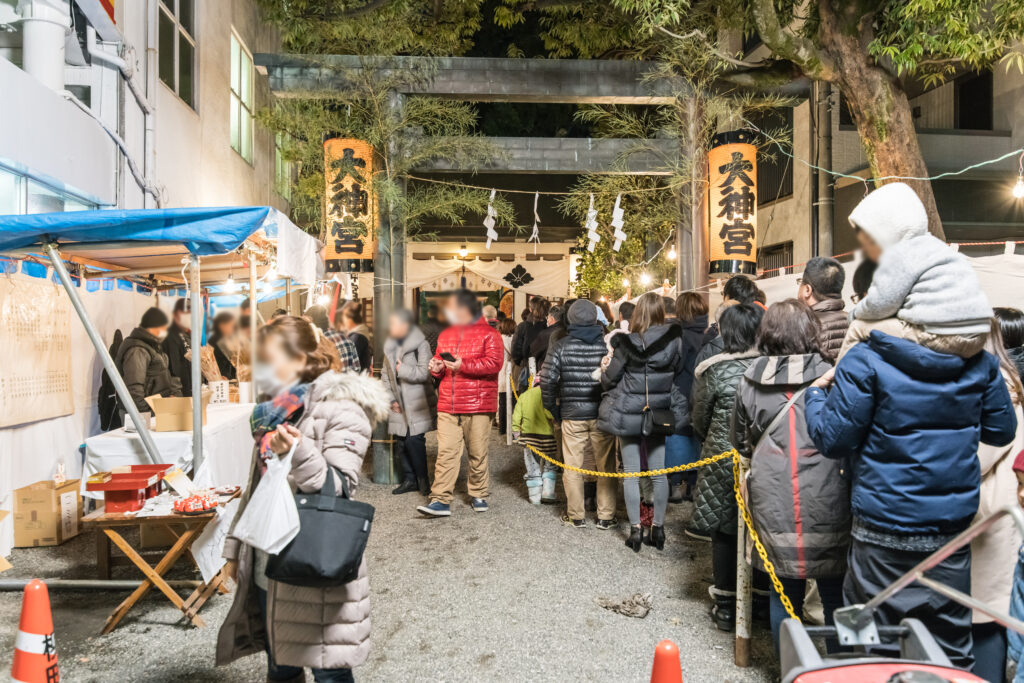
The Daijingu Festival, held every year on Setsubun (Setsubun) on February 3rd, is a festival that heralds the arrival of spring in the Kofu Basin. It has long been affectionately known to many locals as “Daijin-san,” and is a lively winter tradition in Kofu. Here we will introduce what kind of festival the Daijingu Festival is.
The deep connection between Setsubun bean throwing and the Daijingu Festival
The Daijingu Festival is deeply connected to Setsubun. Its central event, the Setsubun Bean-Throwing Ritual, attracts many worshippers, praying for good health and prosperity in business throughout the year. The festival reaches its climax with bean-throwing taking place at two venues, Yokokinju Daijingu and Yanagimachi Daijingu. Another custom unique to this festival is to return old talismans and amulets and receive new ones in return for happiness in the coming year.
Positioned as one of Kofu’s three major festivals
The Daijingu Festival is one of the “Three Great Festivals of Kofu,” which have a particularly long history and tradition in Kofu. Each of these three festivals celebrates a turning point in the seasons and has become deeply rooted in the lives of the local people. Let’s take a look at the position of the Daijingu Festival in relation to the other two festivals.
| Festival name | Event period | Nickname |
|---|---|---|
| Daijingu Festival | February (Setsubun) | Ogami-san |
| Great Festival of Jizo Bodhisattva to ward off evil | February 13th-14th | Unlucky Jizo |
| Inazumi Shrine Annual Festival | May 2-5 | Masanori |
The Daijingu Festival is the earliest of the three major festivals in Kofu,
and as such plays an important role in marking the start of the new year.
The history and traditions of the Daijingu Festival
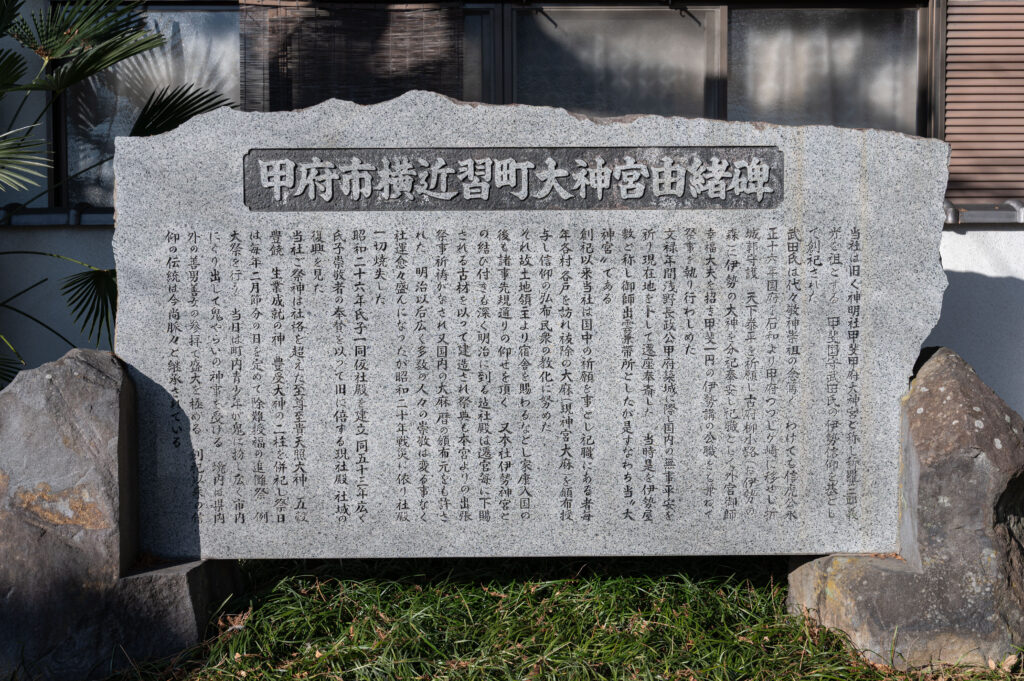
The origin of the festival and the history of the shrine
The Daijingu Festival is a festival that has long been affectionately known to the people of Kofu as “Ogami-san.” The center of this festival is two historic shrines in the center of Kofu city: Yokokinju Daijingu and Yanagimachi Daijingu.
Both shrines enshrine the gods of Ise Jingu and have watched over the development of the city of Kofu. When you look into the origins of each shrine, you can understand why their festivals have been so important.
| Shrine name | Main deity | Overview of history |
|---|---|---|
| Yokokinju Daijingu Shrine | Amaterasu Omikami, Toyouke Daijingu | It was founded during the Kanji era of the Heian period and is said to have been moved to its current location when Kofu Castle was built. It was once responsible for distributing talismans from Ise Shrine throughout Kai Province. |
| Yanagimachi Daijingu Shrine | Amaterasu Omikami | It is said that in 1519 during the Sengoku period, it was moved to Kofu by Takeda Shingen, and then moved to its current location when Kofu Castle was built. |
The evolution of a local festival
The Daijingu Festival has long been rooted in the local community as a seasonal event that heralds the arrival of spring in the Kofu Basin. Since ancient times, it has been an important day for many people to visit the shrine to pray for prosperity in business and safety in their homes, and to pray for happiness throughout the year.
As time passed, the nature of the festival has changed little by little. Originally, it was centered around solemn religious ceremonies at the shrine, but before long, many stalls began to line the streets and surrounding areas of the shrine. The warm atmosphere of today, bustling with people looking for good luck charms such as daruma dolls and rakes, and people enjoying a stroll with family and friends, was born and has been passed down to the present day.
Main Events and Highlights of the Daijingu Festival
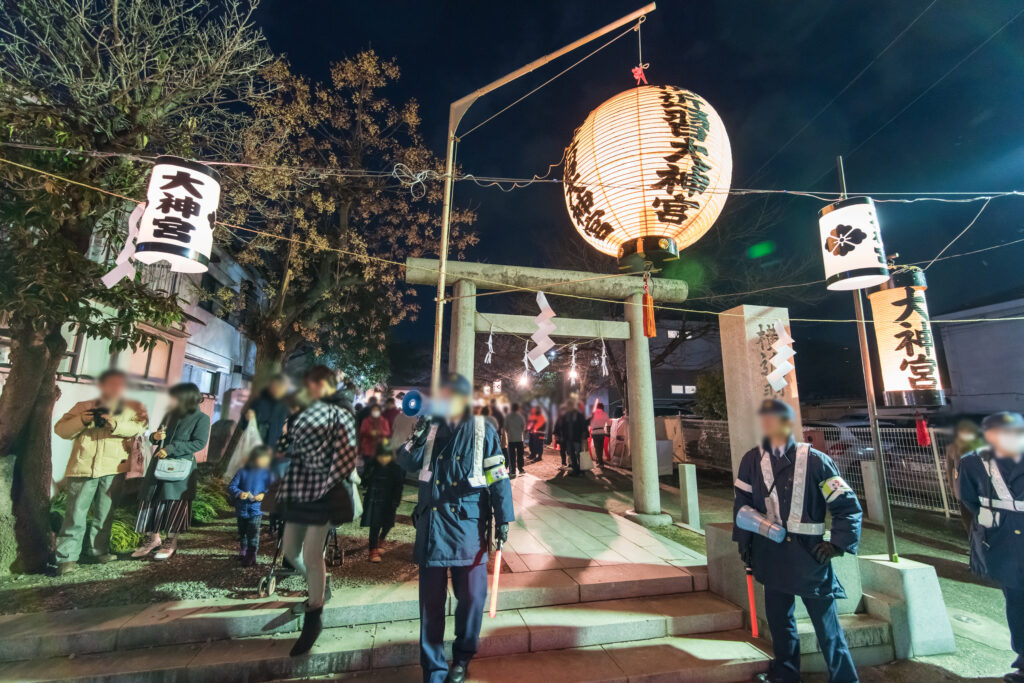
Here we introduce the main events and highlights of the Daijingu Festival, which heralds the arrival of spring in Kofu. Come experience the charm of this festival, affectionately known as “Daijin-san” since ancient times, which attracts many people.
The lively Setsubun bean-throwing ritual

The climax of the Daijingu Festival is undoubtedly the Setsubun bean-throwing ritual. It is held at both Yokokinju Daijingu and Yanagimachi Daijingu, and the grounds are filled with many worshippers seeking good fortune. The venue is filled with excitement as the oldest man and woman, along with local dignitaries, throw lucky beans with spirited chants.
The bean-throwing ceremony takes place multiple times throughout the evening and into the night, so it’s best to time your visit accordingly. The exact times may change from year to year, so be sure to check the Kofu City Tourism Association website before you go.
| shrine | Bean-throwing start time (approximate) |
|---|---|
| Yokokinju Daijingu Shrine | Multiple times from around 6:30 p.m. |
| Yanagimachi Daijingu Shrine | Multiple times from around 6:30 p.m. |
*The above is a guideline based on past event information. Please use it as a reference.
The presence of red demons, blue demons, and little demons livens up the festival!
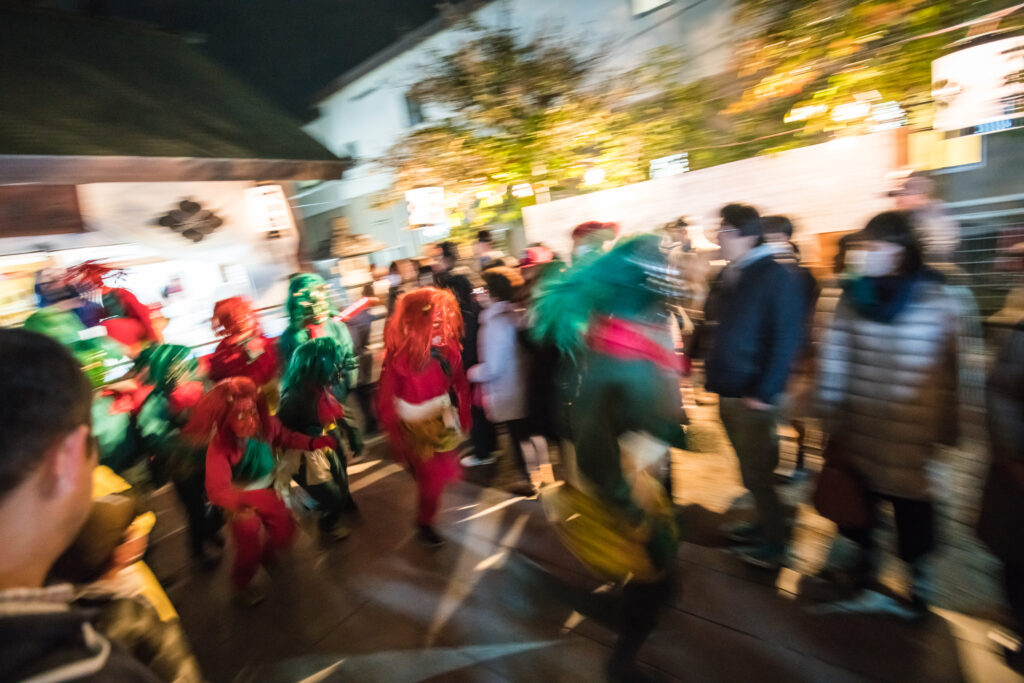
At the Daijingu Festival, red, blue, and small demons make an appearance, instantly livening up the festive atmosphere. The colorful demons roam the grounds and appear in front of the children, making them seem as if they’ve jumped out of a storybook world. The children are surprised at first, but as they cheerfully shout “Oni wa soto!” (Demons out!) and throw beans, smiles gradually begin to spread across their faces. The adults around them watch over them warmly, and the entire venue is filled with laughter and energy.
The appearance of the demons is an important moment in which people can experience the meaning of Setsubun, which is to ward off evil spirits and bring good fortune, and they are an indispensable presence in creating the excitement that is unique to the Daijingu Festival.
The fun of the festival and the stalls that decorate the approach to the shrine
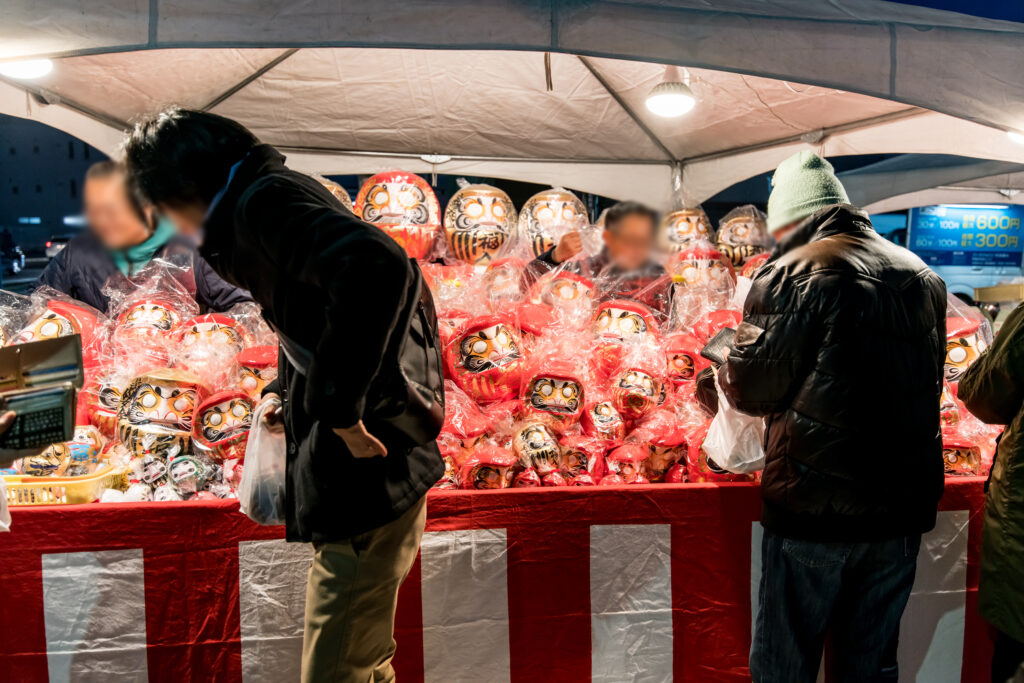
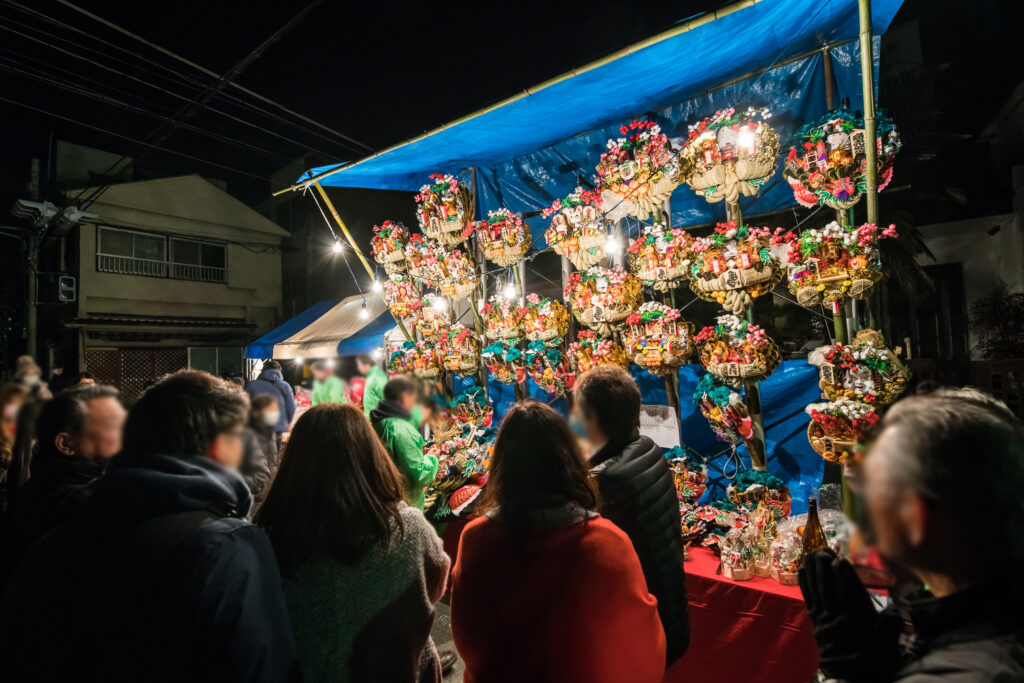
Another great thing to enjoy about the festival is the rows of food stalls lining the approach to the shrine and the surrounding streets. In addition to the classic food stalls like takoyaki and yakisoba, food trucks have also started to set up stalls recently. There’s a wide variety to choose from, from Showa-era classics like masks and raffles to more modern stalls like doll scooping!
You can also find many auspicious items unique to this region. In particular, you’ll find shops selling Koshu Daruma dolls and rakes, as well as stalls selling “Kirizansho,” a Yamanashi Setsubun sweet. Kirizansho is a simple-tasting sweet made by adding sansho pepper and sugar to rice flour, and is beloved as a sign of the coming of spring.
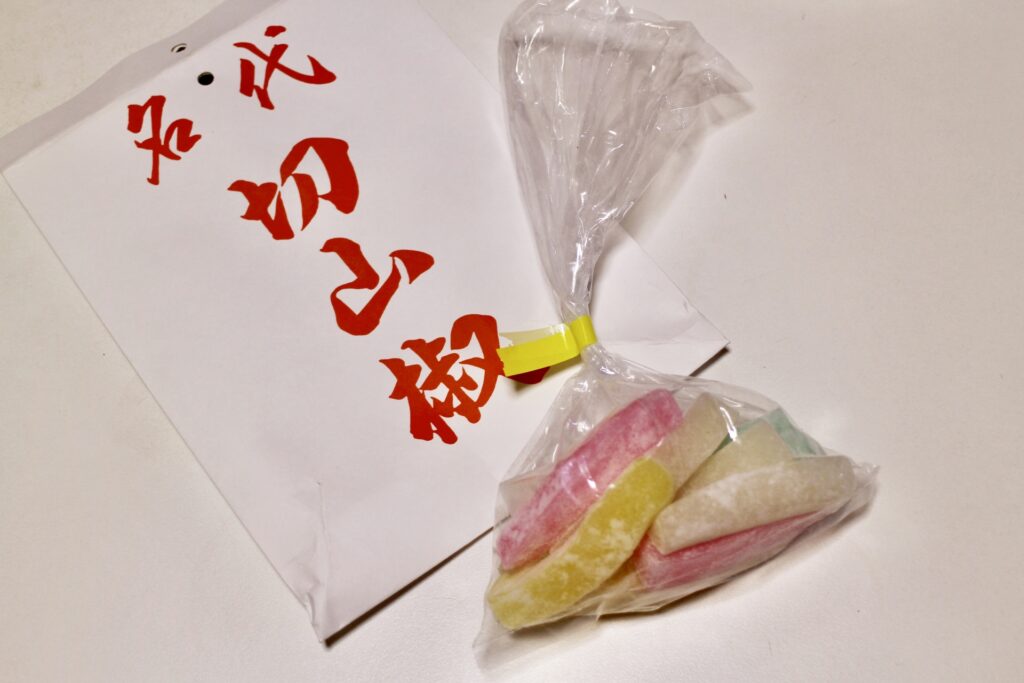
It’s also wonderful to enjoy eating your way around the festival with family and friends in the lively atmosphere.
Ogami’s specialty? What is “Garagara”?
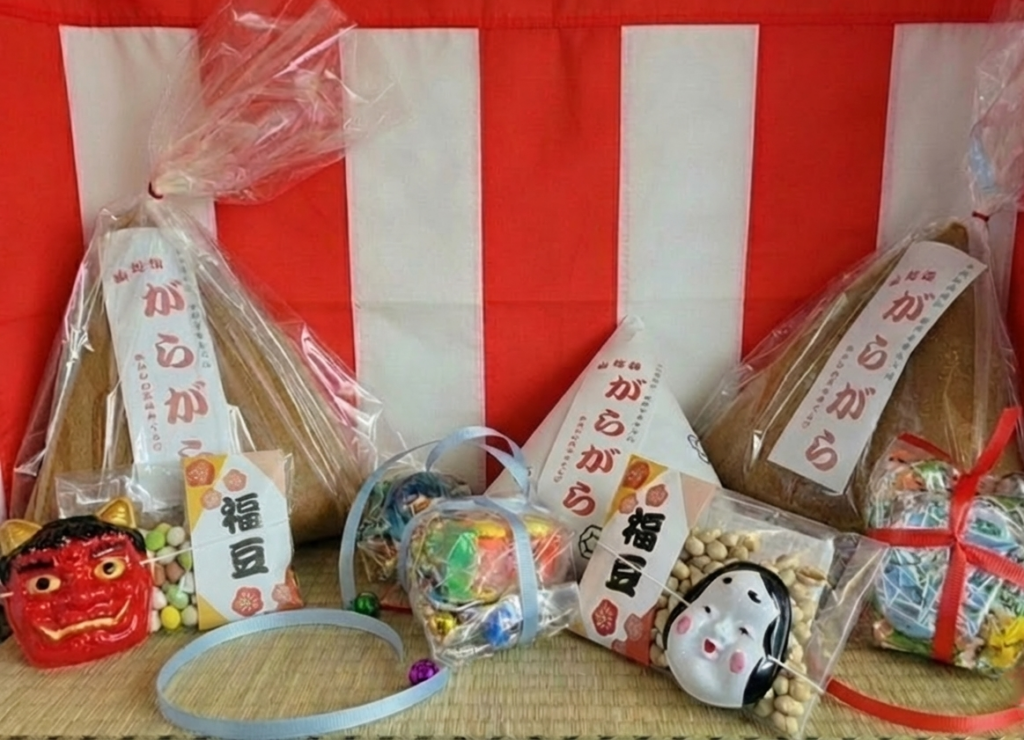
A beloved specialty of the Daijingu Festival is a traditional sweet called “garagara.” Made from baked wheat flour, these triangular sweets, larger than the palm of your hand, contain small toys and bells inside, and are named “garagara” because they make a sound when shaken. The sound of the bells is said to ward off misfortune and ward off evil spirits, and they have long been popular as a lucky charm for Setsubun.
The fun part is when you break it open and the toy inside pops out, making it one of the festival memories for children. Several Japanese confectionery shops in Kofu City have started taking reservations and selling them from mid-January, and recently they have even started including stationery and drip coffee! The baked goods around it have a simple, gentle taste, and even adults will feel a sense of nostalgia. Be sure to try out the “Garagara” rattle at the Kofu Daijingu Festival, where both children and adults can experience the retro Showa era atmosphere.
Etiquette for praying for protection from misfortune and good fortune
Many people visit the Daijingu Festival to pray for prosperity in business, safety for their families, and protection from misfortune and good fortune. When visiting a shrine, knowing the proper etiquette will help you offer your prayers with a purer mind. Here we will introduce the general etiquette for visiting a shrine.
- Passing through the torii gate : Bow slightly in front of the torii gate, which marks the entrance to the shrine, before entering the grounds.
- Purify yourself at the temizuya (purifying fountain) : Before praying, rinse your hands and mouth at the temizuya (purifying fountain) to purify your body and mind.
- Pray at the worship hall : After ringing the bell and offering a coin, bow twice, clap twice, and bow once.
During this time, a place will also be set up for people to deposit their old talismans. Why not receive a new talisman and pray for good health and safety for the year ahead?
Tourist spots to stop by around the Daijingu Festival
There are many places around the festival site where you can experience history, culture, and the unique flavors of Yamanashi. Why not combine your time at the Daijingu Festival with a stroll around the city of Kofu? Here we will introduce some attractive spots that you can easily drop by.
SADOYA Winery
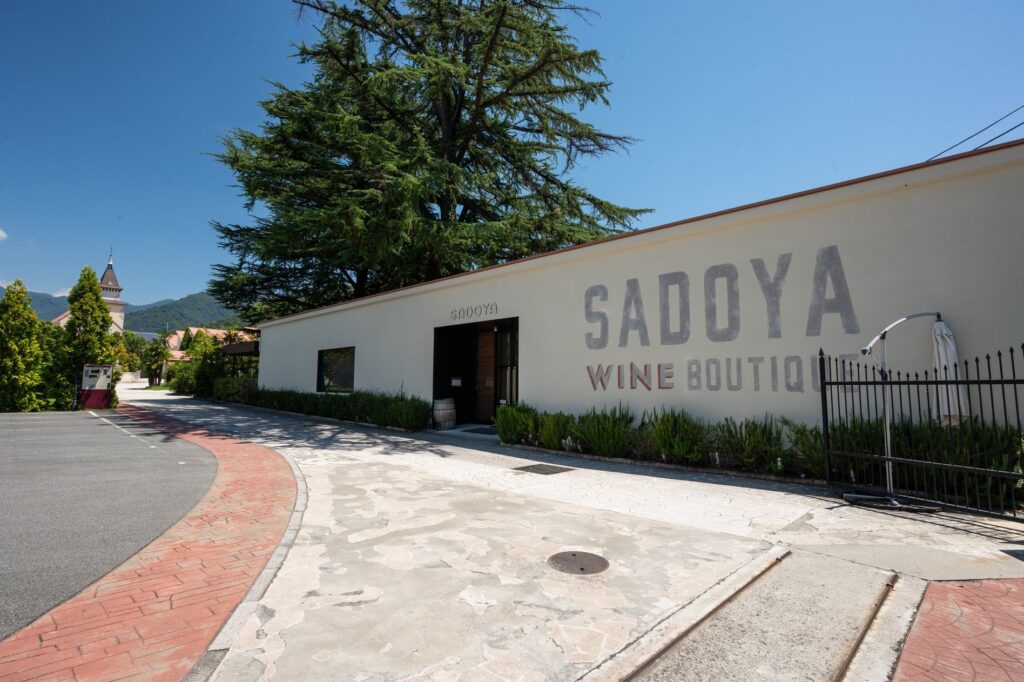
This historic winery was founded in 1917 and is located just a short walk from Kofu Station. Its stylish building is reminiscent of a European tropical resort. If you make a reservation, you can also tour the historic underground wine cellar. Everyone can enjoy it, including wine lovers, as they also offer delicious grape juice. Why not find your favorite bottle to take home as a memento of the festival?
| project | content |
|---|---|
| location | 3-3-24 Kitaguchi, Kofu City, Yamanashi Prefecture |
| access | Approximately 5 minutes walk from the north exit of JR Kofu Station |
| Official website | SADOYA Winery |
Koshu Yumekoji
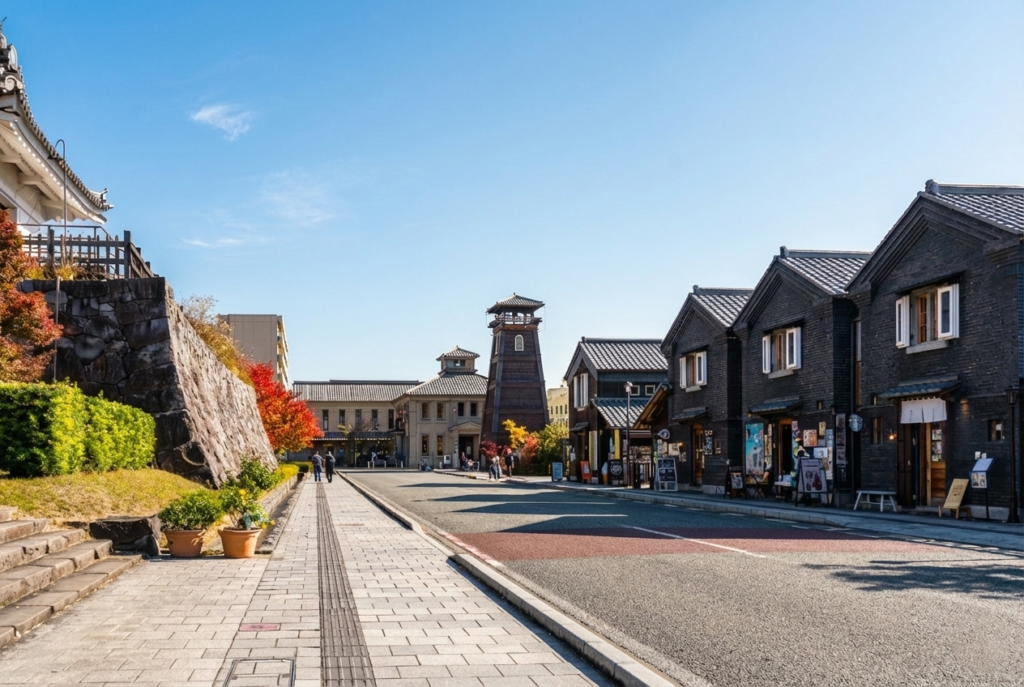
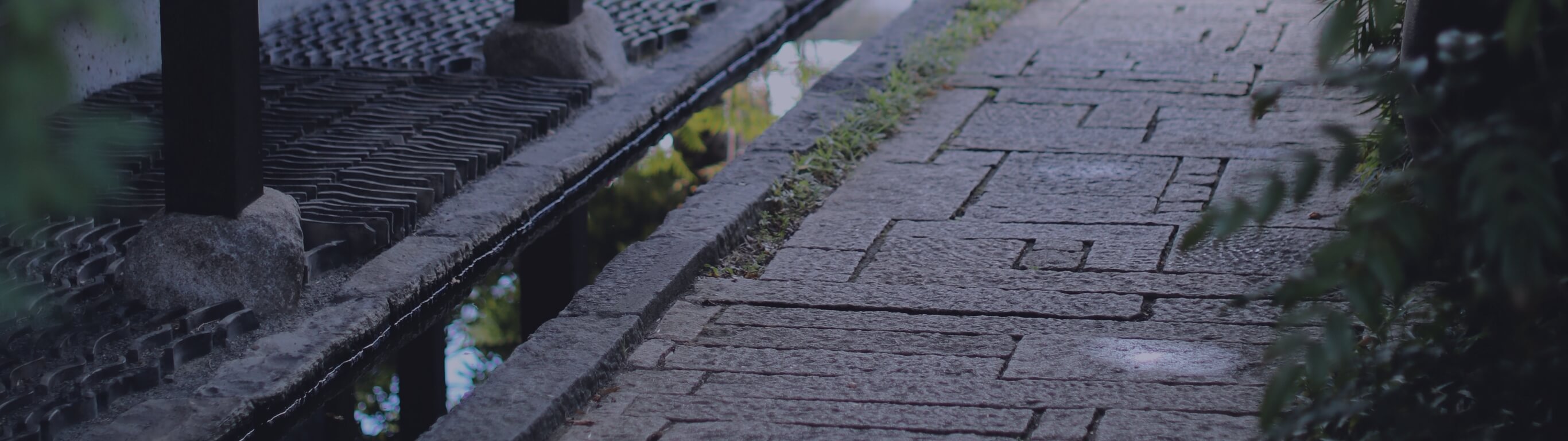
Located right next to the north exit of Kofu Station, Koshu Yumekoji is a charming area that recreates the castle town of Kofu from the Meiji to early Showa periods. Walking down the cobblestone alleys will make you feel as if you’ve traveled back in time. With shops selling traditional Yamanashi crafts, restaurants using locally sourced ingredients, and small art museums, this is a place where you can experience all the charms of Yamanashi all at once. It’s the perfect place for a quick stroll, a break, or souvenir hunting before a festival.
| project | content |
|---|---|
| location | 1-1-25 Marunouchi, Kofu City, Yamanashi Prefecture |
| access | Approximately 3 minutes walk from the north exit of JR Kofu Station |
Maizuru Castle Park (Kofu Castle Ruins)
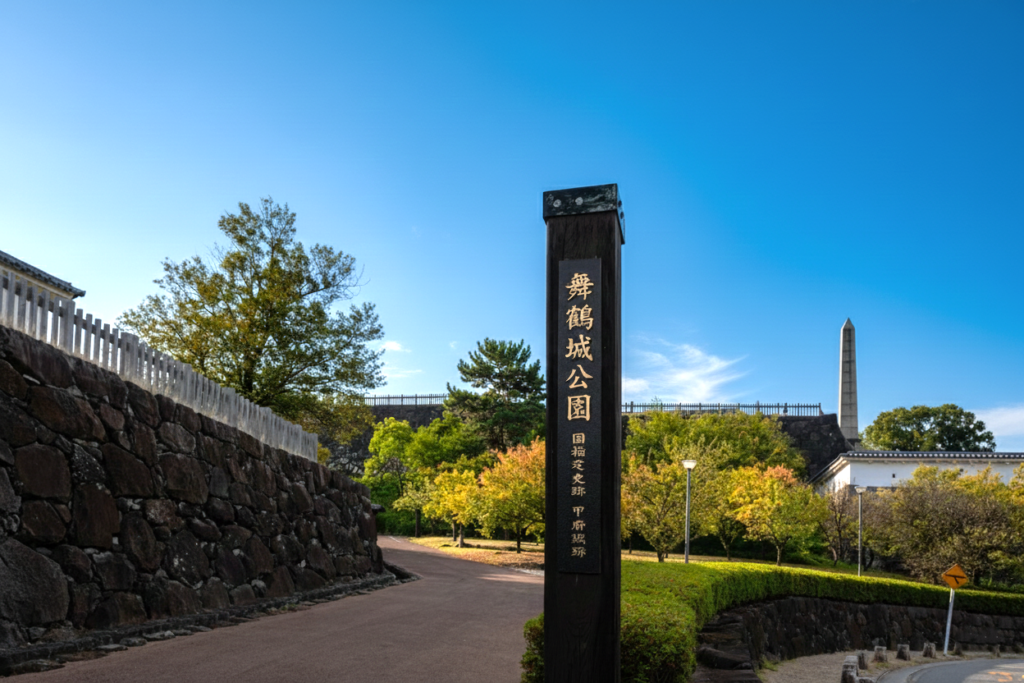
The site where Kofu Castle once stood is now a nationally designated historic site and a park where people can relax. The castle was built by order of Toyotomi Hideyoshi, and its impressive stone walls convey the atmosphere of the time. You can freely stroll within the park, and from the castle tower you can see the Kofu cityscape and Mount Fuji. It is also close to the venue of the Daijingu Festival, making it a recommended place to spend some time relaxing while immersed in history.
| project | content |
|---|---|
| location | 1-5-4 Marunouchi, Kofu City, Yamanashi Prefecture |
| access | Approximately 3 minutes walk from the south exit of JR Kofu Station |
| Official website | Kofu City Tourism Division |
Yamanashi Jewelry Museum
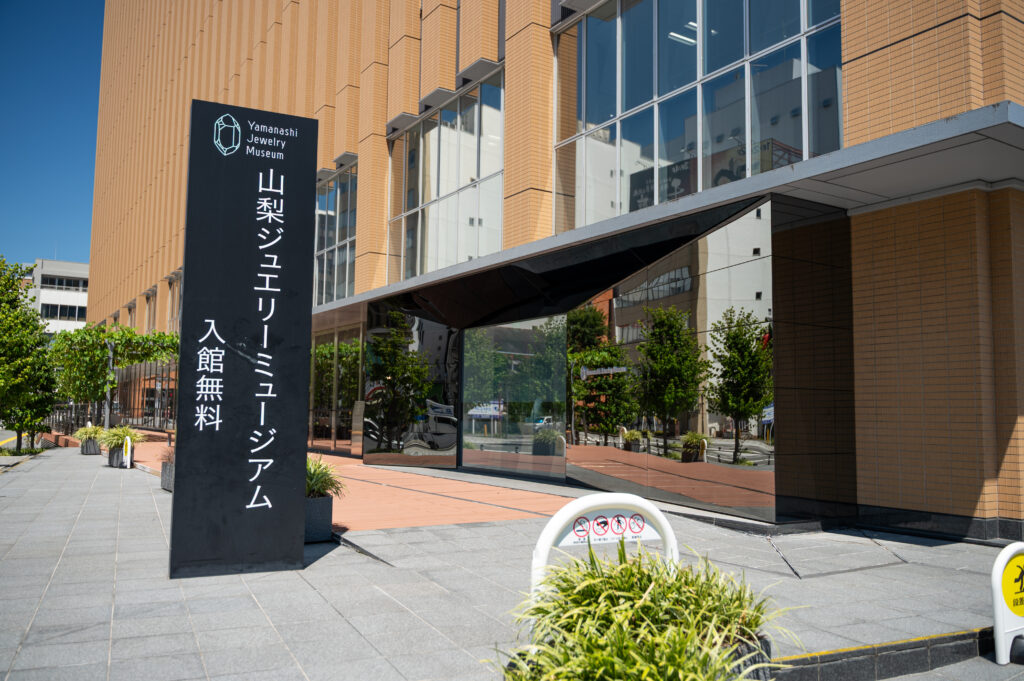
This museum is unique to Yamanashi, where the jewelry industry is thriving, and allows you to experience the glittering world of jewelry from Kofu, the “City of Jewelry.” In addition to exhibiting beautiful pieces made by Yamanashi artisans, you can also enjoy watching production demonstrations and trying your hand at jewelry making. Admission is free, making it an art spot you can easily drop by and enjoy even on rainy days.
| project | content |
|---|---|
| location | 1-6-1 Marunouchi, Kofu City, Yamanashi Prefecture Yamanashi Prefecture Disaster Prevention Building 1st floor |
| access | Approximately 7 minutes walk from the south exit of JR Kofu Station |
| Official website | Yamanashi Jewelry Museum |
Koedo Kofu Hanakoji
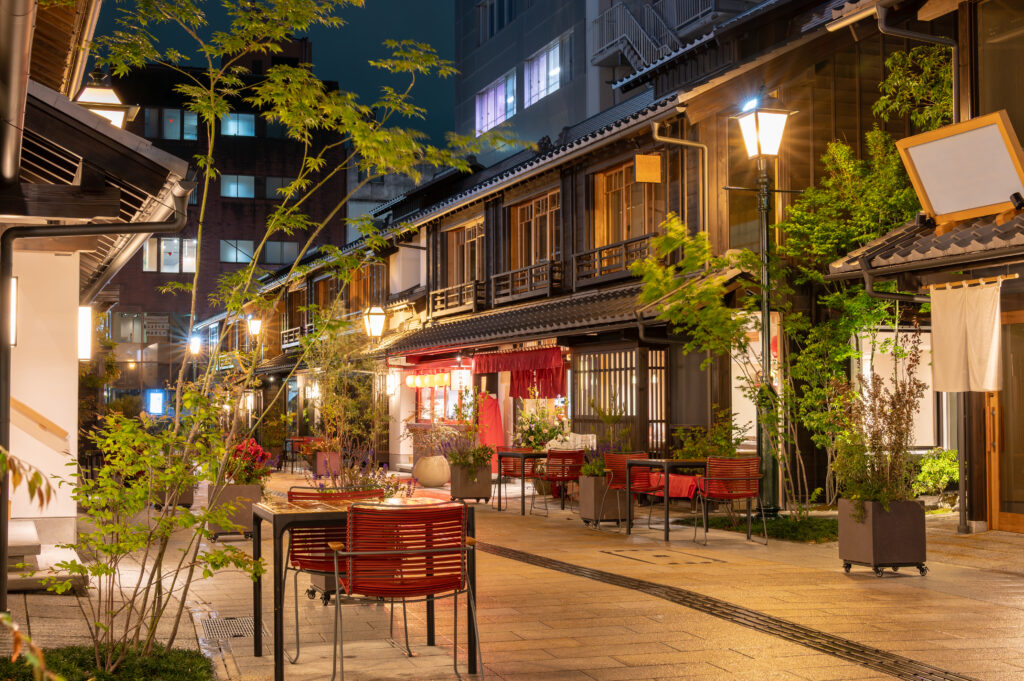
This charming area recreates the bustle of Kofu when it was known as Little Edo. Townhouse-style buildings line the cobblestone alleys, and at night the area is enveloped in a fantastical atmosphere with lanterns lit. It’s fun just to stroll around, but there are also many unique restaurants, making it a great place to relax and enjoy a meal and drinks after the Daijingu Festival.
| project | content |
|---|---|
| location | 1-11-6 Chuo, Kofu City, Yamanashi Prefecture |
| access | Approximately 10 minutes walk from the south exit of JR Kofu Station |
| Official website | koedo Kofu Hanakoji |
The charm of Kofu’s three major festivals and the Daijingu Festival
Here we will introduce two festivals full of history and energy that, along with the Daijingu Festival, are known as the “Three Great Festivals of Kofu.” Why not experience the unique charms of each festival and gain a deeper understanding of Kofu’s culture?
| Festival name | Nickname | Event period | Main contents |
|---|---|---|---|
| Daijingu Festival | Ogami-san | February 3rd (Setsubun) | Bean throwing to pray for prosperity in business and safety in the home, and stalls selling lucky charms |
| Jizo Shrine Festival to ward off evil spirits | Unlucky Jizo | February 13th-14th | A custom of offering round objects equal to the number of years one has lived, as a prayer for protection from misfortune. |
| Inazumi Shrine Annual Festival | Masanori | May 2nd to 5th | A festival for the god of agriculture, with a lively plant market and many street stalls |
Yakujizo Festival
The Great Festival of the Jizo of Evil, affectionately known as “Yaku Jizo-san,” is held at Enzai-ji Temple every year from noon on February 13th to noon on the 14th. Legend has it that during these 24 hours, the Jizo will listen to people’s wishes, and the festival is crowded with many worshippers. The custom of those in their unlucky years offering round objects such as one-yen coins or candies, one for each year they are old, in the hope of warding off misfortune continues to this day.
Inazumi Shrine Annual Festival
The annual festival of Inazumi Shrine, known as “Masano-san,” is held every year from May 2nd to 5th and has been held since the Edo period. In the past, it was also called the “Senryo Festival” due to the large number of people who attended and the large amount of money exchanged. What began as a festival for the god of agriculture is now famous for its plant market, with many stalls lined up in and around the shrine grounds, attracting many people.
Access and event information for the Daijingu Festival
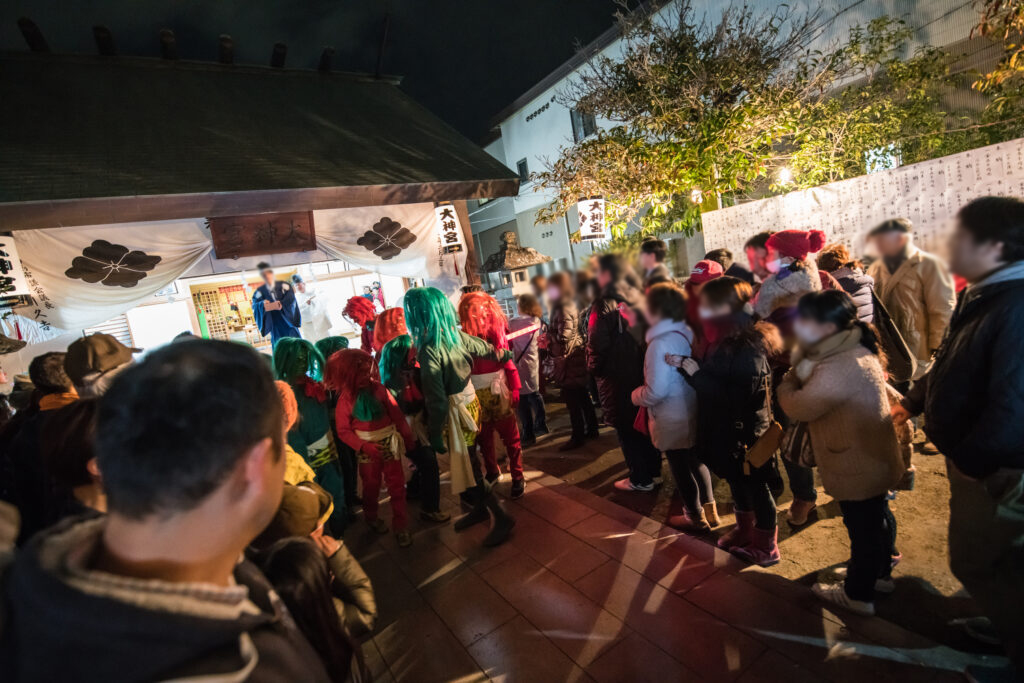
The new year has begun, and Setsubun season is fast approaching. Here we will explain the dates and times of the Daijingu Festival, the first of Kofu’s three major festivals, as well as transportation options to get to the venue. Traffic restrictions may be implemented in the surrounding area on the day of the festival, so it’s best to check the information before heading out.
Date and location
The Daijingu Festival is held every year on Setsubun, February 3rd, to herald the arrival of spring in Kofu. The festival takes place at two shrines, Yokokinju Daijingu and Yanagimachi Daijingu, and is bustling with people, with many stalls lined up and a bean-throwing ritual taking place.
| project | content |
|---|---|
| Date | Tuesday, February 3, 2026 *Setsubun Day |
| Event time | From around noon to around 9:00 PM (varies depending on the event) |
| place | Yokokinju Daijingu Shrine (Chuo 2-chome, Kofu City), Yanagimachi Daijingu Shrine (Chuo 4-chome, Kofu City) |
| Main events | Setsubun bean-throwing ritual, distribution of sacred talismans, opening of food stalls, and a parade of adults and children dressed as demons. |
Yokokinju Daijingu Shrine

On the day of the festival, various rituals are solemnly performed, including the distribution of sacred talismans, the offering of Kagura dance, and more. A
pure breeze flows through the grounds, creating a calm atmosphere unique to traditional events, quite different from the bustling atmosphere of the street stalls.
Yanagimachi Daijingu Shrine
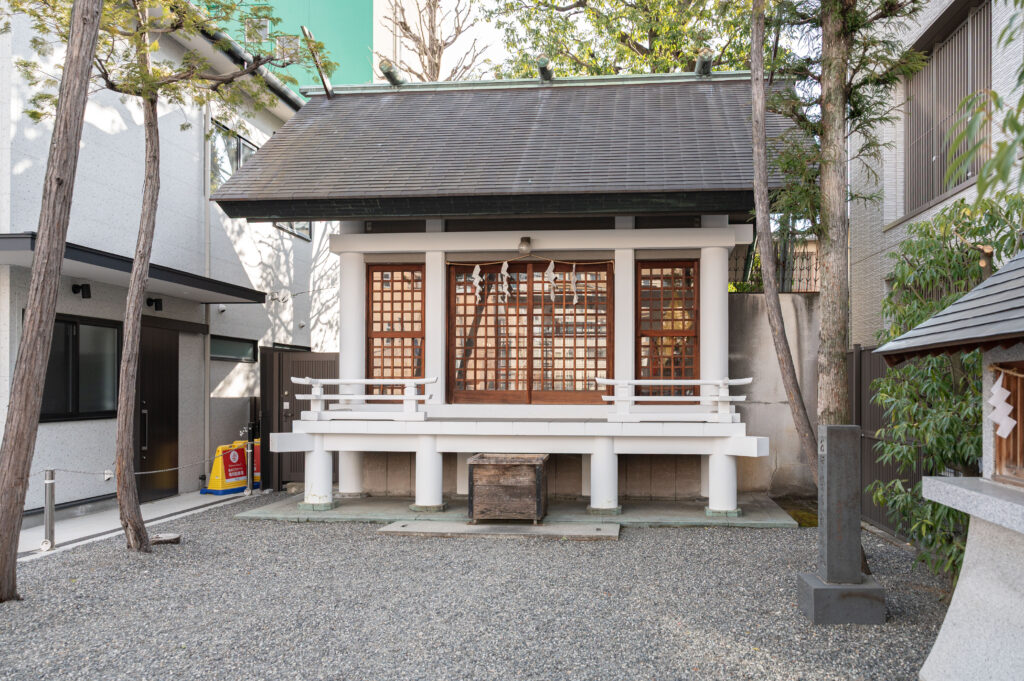
Yanagimachi Daijingu Shrine, located in the central area where the festival stalls are lined up, is crowded with worshippers on the day of the festival.
Many people visit in search of a special feeling, as sacred talismans are distributed and special Setsubun stamps are available.
Red and blue demons appear around the shrine, creating a lively atmosphere for the visitors through photo opportunities. In addition, traditional Shinto rituals such as the portable shrine procession are also held, creating a dynamic spectacle.
Yanagimachi Daijingu Shrine is the central spot where you can experience the charm of the Daijingu Festival, where you can enjoy both the lively atmosphere of the street stalls and the solemn rituals.
Transportation and parking information
The festival is easily accessible by public transport. If you are coming by car, please be aware of parking information and traffic regulations.
Access by public transport
The nearest station is Kofu Station on the JR Chuo Main Line, and you can walk from the station to the venue.
- Train:
Approximately 15 minutes on foot from the south exit of Kofu Station on the JR Chuo Main Line or Minobu Line
Access by car and parking
If you are driving, head towards downtown Kofu from the highway interchange. There are no parking lots reserved for festival attendees or worshippers around the venue, and traffic restrictions will be in place on the day, so we recommend that you consider using a nearby paid parking lot.
- By car:
About 15 minutes from Kofu Showa IC on the Chuo Expressway - There is no dedicated parking lot at the venue
. Please use the nearby paid parking lot. - Traffic restrictions
: Every year, traffic restrictions are implemented on roads around the venue from around 3:00 PM to around 11:00 PM on the day of the festival. For more information, please check the Kofu City Tourism Association website for the latest information.
summary
The Daijingu Festival, one of Kofu’s three major festivals, is a traditional festival that represents Kofu and is held every year around Setsubun. The highlight is the impressive bean-throwing ceremony, in which red and blue demons appear. The lively voices of children echo throughout the venue, allowing visitors to come together and enjoy the seasonal change of season.
There are also many street stalls set up in the area, allowing visitors to enjoy eating and searching for lucky charms. The area is filled with nostalgic scenery, including the famous “garagara” rattle, and the retro Showa-era atmosphere is another attraction. The Daijingu Festival, which combines traditions passed down from ancient times with the lively atmosphere of a festival, attracts many people of all ages.
Not only can you visit the shrine to pray for protection from misfortune and good fortune, but you can also enjoy the surrounding tourist spots and gourmet food to create special memories that are unique to winter in Kofu. Be sure to visit the Ojingu Festival, which is deeply rooted in the community and has been cherished and passed down to this day.
 LINEで送る
 シェア
シェア ポスト
ポスト